California sea turtle eggs enter final hatch window
Biologists at the Aquarium of the Pacific are preparing for the first West Coast sea turtle hatchlings after relocating 204 olive ridley eggs from threatened nesting sites in late September.
By Sofia Molina ·
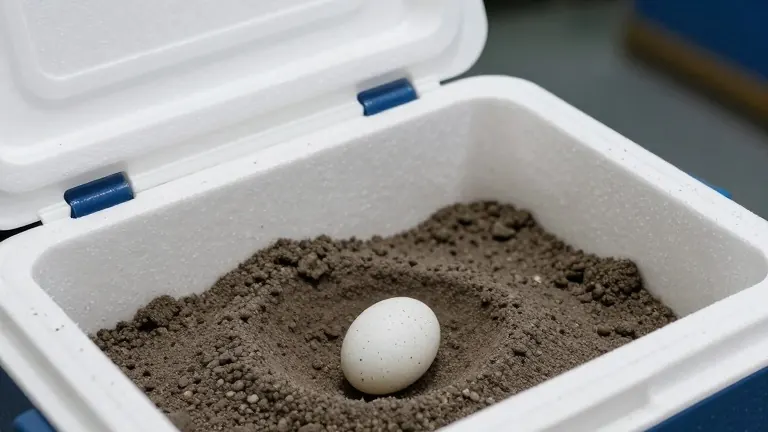
Hatching day for California’s first sea turtle eggs could arrive within days. Biologists are bracing for a release event that has never occurred on the nation’s West Coast. The 204 olive ridley eggs currently sit in Styrofoam coolers at the Aquarium of the Pacific in Long Beach.
The eggs arrived at the facility on Sept. 29. Federal biologists moved them as a precaution after forecasters predicted high tides would swamp the nesting sites in Orange County. The first clutch was laid on Saturday, 45 days before this week. A second turtle laid eggs three days later on Sept. 19 in Huntington Beach.
Staff members check the coolers three to four times daily. They will increase visits to every other hour as the expected hatch window approaches. Wireless sensors monitor the environment inside the containers. The goal is to keep the sand temperature between 85 and 86 degrees Fahrenheit.
Dr. Lance Adams, the aquarium’s director of veterinary services, said development should continue if the eggs were fertilized. The species typically has an incubation period of 45 to 60 days. No one is certain if the eggs are developing normally or if they are fertilized, but the timeline suggests hatching is imminent.
Olive ridleys usually nest in tropical waters. The farthest known northern nest before this year was in Baja California Sur, Mexico, about 700 miles south of Orange County. A marine heat wave and strong El Niño conditions pushed Southern California water temperatures closer to the turtles’ preferred range. NOAA expects ocean temperatures at hatch time to be suitable for the newborns.
Sand temperature determines the sex of the hatchlings. Cooler sand produces males, while warmer sand produces females. The aquarium has worked to maintain ideal conditions, but Adams noted that the initial weeks on the beach in Orange County may still influence the outcome. The hatchlings will be kept in the dark until evening to conserve energy.
In the wild, hatchlings stay under the sand until nightfall to reduce predation risk. They then burst from the sand and swim furiously to the open ocean. Adams described this as a frenzy of energy that helps them reach pelagic areas. The release will not be announced in advance to avoid disorienting lights and crowds.
Federal biologists from the U.S. Fish and Wildlife Service will monitor surf conditions and currents. They will select a release site near the aquarium that offers the best chance of survival. The hatchlings will crawl from the sand to the sea, guided by moonlight and fueled by an external yolk sac.
Less than 1% of sea turtle hatchlings survive to adulthood. Females who survive often return to the area where they hatched to lay their own eggs. Pamela Plotkin, a retired oceanography professor at Texas A&M University, predicted that 85% to 95% of the eggs will hatch. She expects a few to survive to adulthood and return to California beaches in 10 to 15 years.
Source: Los Angeles Times