Stuck Tankers Reveal Realities of Russia's Arctic Trade Push
A recent ice jam in the Vilkitsky Strait highlights logistical hurdles that challenge Moscow's optimistic forecasts for the Northern Sea Route.
By Khalid Rahman ·
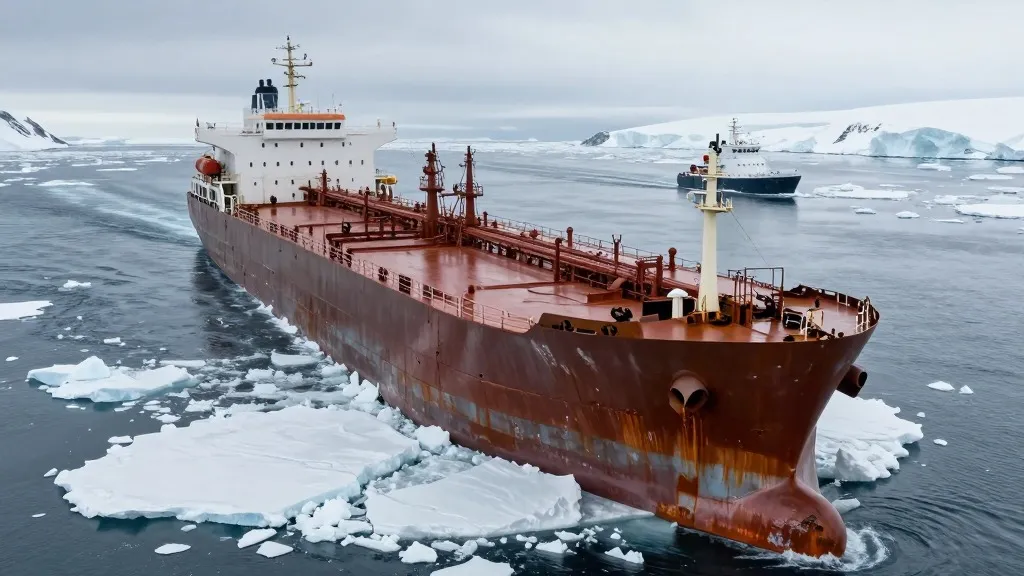
A cluster of sanctioned Russian tankers became trapped in Arctic ice this summer, exposing significant logistical challenges on the Northern Sea Route. The vessels were stranded in the Vilkitsky Strait, a narrow choke point between the Siberian coast and Bolshevik Island. Although nuclear-powered icebreakers were available, they were days away from the scene. Only one tanker successfully navigated the strait before the jam cleared. The remaining ships waited up to two weeks for assistance but ultimately failed to pass through. They were forced to take alternative routes to complete their voyages.
This incident complicates the Kremlin's narrative that the Arctic passage offers a safe and efficient trade corridor. The route is positioned to avoid Ukrainian drone threats and European naval interception. Record volumes of Russian crude oil and liquefied natural gas moved along the path earlier this year. However, environmental experts note that reduced ice cover does not guarantee easier travel. Melting ice can fragment and pack tightly in narrow straits, blocking ships that lack specialized ice-breaking capabilities. This dynamic creates unpredictable conditions for commercial traffic despite the warming climate.
President Vladimir Putin has previously labeled the route a reliable path to major global markets. He recently claimed that 37 million tons of cargo moved along the route in 2025 and predicted that figure would nearly double by 2030. Earlier targets from 2019 aimed for 80 million tons by 2024, a goal that appears distant given current data. The Norway-funded Center for High North Logistics reports that Russia shipped about 2 million tons of crude oil, or roughly 15 million barrels, along the full route to Asia by September. Recent data indicates total volumes reached approximately 20 million barrels by mid-October. This represents a 50 percent increase over 2025 levels but accounts for only about 1 percent of Russia's total seaborne oil exports.
Western sanctions continue to impede Russia's ability to maintain its Arctic fleet and infrastructure. Senior analysts point out that spare parts and construction materials often require complex routing through third parties. Repair services previously provided by Norwegian, Danish, and Dutch firms are no longer accessible to Russian operators. This reliance on external support creates vulnerabilities in the fleet's operational readiness and long-term sustainability. The shipping surge is therefore driven from a relatively low base rather than a sudden expansion of capacity.
Other nations are also testing the viability of the route. South Korea reported that its first container ship used the Northern Sea Route on October 22. Chinese operators ran their first scheduled container service to Europe along the path this year. While officials in these countries praise the route as a shortcut, they acknowledge difficult conditions, including large ice floes in key straits. Questions remain regarding how Russia will manage access and tolls for foreign vessels. Some analysts suggest Moscow may limit access to maintain strategic control over this emerging commercial waterway.
Security and environmental concerns are rising as traffic increases. EU foreign affairs chief Kaja Kallas described the region as a front line of global power competition this week. NATO launched its Arctic Sentry mission in February, and the United States announced plans to expand its military presence in Greenland last month. Environmental groups warn that aging shadow fleet tankers pose risks to the fragile Arctic ecosystem. Oil spills degrade slowly in cold water and can spread across ice, potentially accelerating climate change impacts. Russia publishes little information on incidents along the route, leaving independent observers with limited data on the true state of operations.
Source: RFE/RL