40,000 salmon caught by trawlers in 2026, fueling Alaska Senate fight
Indigenous voters in the Kuskokwim River delta are turning to politics as their traditional food source vanishes.
By Jason Fischer ·
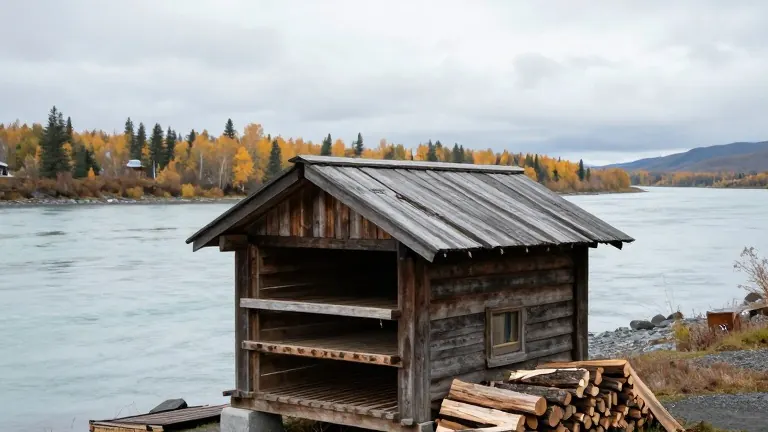
The drying racks in Evon Waska’s smokehouse stand empty. For years, these racks in his home on the Kuskokwim River held the salmon that sustained his family. Now, the fish are gone, and the government has closed the river to subsistence fishing to conserve what remains. Waska, who lives where his parents settled after ending their nomadic life, points to a specific cause: industrial trawlers operating miles offshore.
Waska argues that while his community faces closures, the large fishing vessels continue to operate. "They don't close the trawlers. They close me and my people first," he said. This local frustration has become a central issue in the tight U.S. Senate race in Alaska, where the outcome could shift the balance of power in Washington, D.C.
The conflict centers on the pollock fishery, an industry valued at $1 billion. Trawlers use sock-shaped nets that are a quarter mile long, with openings the size of a football field, to harvest white pollock. While the pollock is processed into imitation crab for fast-food chains, the nets also capture king salmon and other species. This unintended catch, known as bycatch, is often discarded, a practice that has angered residents in western Alaska.
Political campaigns in the state have pivoted to this issue. Republican incumbent Dan Sullivan, who has historically supported the pollock industry, is now promoting a new bill. He describes it as the most comprehensive bycatch legislation ever created to reduce waste and protect the seafloor. However, his Democratic challenger, Mary Peltola, a Kuskokwim Native, calls Sullivan's effort an election-year ploy.
Peltola has proposed banning factory trawlers, the largest vessels in the fleet. She criticized Sullivan for accepting large sums of money from the industry while delaying action. "Dan Sullivan reeled in over $300,000 from trawlers and waited until the 11th hour for a half-hearted and half-baked solution," Peltola said. Her campaign targets the specific financial ties between the incumbent and the vessels that harvest the ocean.
Industry leaders push back against the narrative that trawlers are the primary cause of the salmon decline. Heather Mann, who leads a trawlers association, stated that eliminating the pollock fishery would have a minimal impact on restoring salmon runs, according to scientific data. She argues that scapegoating the industry will not solve the problems in western Alaska.
Data from this year shows that pollock trawlers have caught 40,000 Alaska salmon. While this figure represents a small fraction of the total pollock harvest, the loss is severe in communities where fishing is the main occupation. In the village of Kwethluk, tribal president Mary Nikolai noted that most smokehouses were unused all summer. "It's like a slow trend of closing our workforce out," Nikolai said, observing the impact on the local economy and culture.
The race remains competitive, with both candidates using the salmon issue to mobilize voters. For the people of the Kuskokwim, the stakes extend beyond a single election. They hope the close race will draw national attention to the threat facing their traditional way of life.
Source: WLRN