Africom Air Campaign in Jilib Forces Civilians Toward Flooded Juba River
Residents report daily strikes are displacing families into the path of severe El Niño flooding, straining limited aid resources.
By Eric Laurent ·
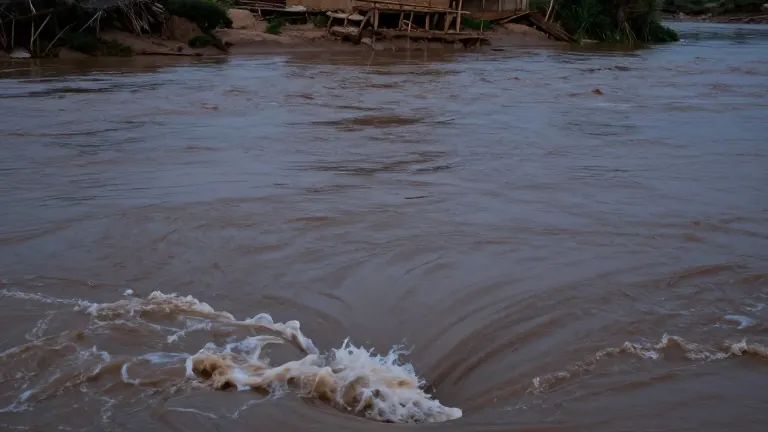
Waist-deep water surrounds the home of Cayni Ali in Jilib.
The 27-year-old mother of six lives five meters from the River Juba, where drones now appear with regular frequency. She reports that the strikes kill both animals and civilians. Her testimony provides a rare glimpse into a region that remains largely closed to outside observers.
The United States Africa Command has coordinated an aerial campaign in the area since August. US records list one strike in August and six in the previous month, totaling 11 operations. Residents describe a much higher frequency. Farhan Ahmed, who fled the area last month, stated that strikes occurred daily and that one attack leveled five homes in his neighborhood. The US maintains that it publicizes all strikes under its authority and keeps no hidden count. David Sterman of the New America thinktank noted that unclear attribution leaves room for covert operations.
The timing of the air operations coincides with a strengthening El Niño pattern. In 2023, the previous El Niño event caused the worst floods in a century and displaced more than 1.2 million people. UN agencies designate the Juba River basin as an area of particular concern. The International Committee of the Red Cross expects severe flooding to continue. Arbey Famu, a 70-year-old resident of Ahmed Yare, reported that her maize and sorghum crops are already underwater.
Africom declined to share operational details of the campaign. A spokesperson stated that the command does not target civilians or use weather as a method of warfare. The command said it targets lawful military objectives and takes feasible steps to limit civilian harm. One source monitoring the floodplain alleged that El Niño is being used to push the population into flood-prone areas. Jethro Norman of the Danish Institute for International Studies described the use of humanitarian remote sensing to inflict casualties as a reversal of standard process.
Preparation for the incoming floods remains limited. Ali Adan Ali, the commissioner for displaced people in Jubaland, identified 327 flood-prone regions. By October, only half of those regions had received El Niño warnings. He expressed concern over a shortage of boats, which could leave thousands on the east side of the river unable to reach help in Kismayo. During the last El Niño, 19,000 people were stranded for a week without food. Somalia's aid budget has dropped from $2.2 billion in 2023 to about $300,000.
The International Committee of the Red Cross has treated 205 weapon-related injury patients in Kismayo this year. This figure represents a 43 percent increase over last year. Hunger compounds the physical danger of the rising waters. Omar's family of 13 consumes one small fish per day. Habiba Ali, 55, said her family shares a single daily meal of maize. Zakaria Mohammed, head nurse at the ICRC-supported hospital, reported that child malnutrition cases have risen 40 percent this year. Shukri Ahmed, president of Galbeed refugee camp, estimated that 6,000 people may have died in Kismayo's displacement sites since USAID shut down last year.
Xaawo Nacdoor fled Jamame at night after al-Shabaab blocked her from seeking treatment. She carried her 14-month-old daughter Faadumo for three days. The child weighed 4.1 kilograms on arrival and 4.4 kilograms three days later. She survived. Most patients at the facility say they will never return home, citing the absence of school, healthcare, and food under al-Shabaab control.
Source: The Guardian