AI Drones Give Ukraine a 10,000x Combat Edge
A Kyiv-based firm uses onboard computers to guide drones for the final 500 meters of flight, allowing operators to release control and let the machine select targets.
By Eric Laurent ·
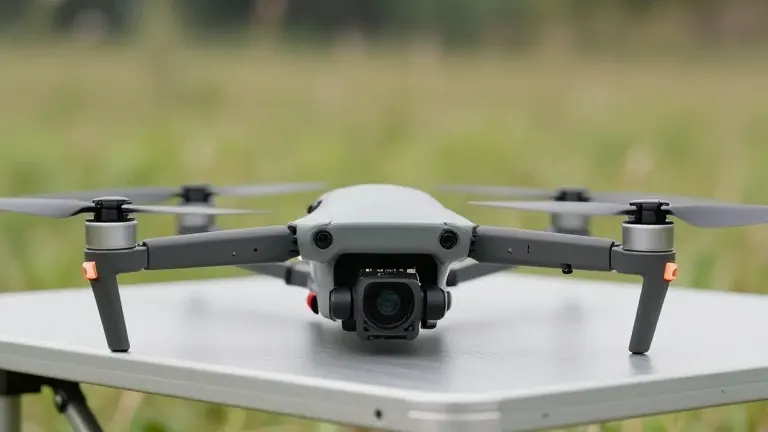
Yaroslav Azhnyuk calculates that artificial intelligence can make a combat drone 10,000 times more effective. The Kyiv-based entrepreneur runs The Fourth Law and Odd Systems, two defense firms producing autonomous drones for the Ukrainian military. Dozens of military units now operate the Lupynis-10-TFL-1, a system that combines a standard first-person-view drone with an autonomous terminal guidance unit.
The technology alters the economic calculus of aerial warfare. Azhnyuk, a 37-year-old computer scientist who previously worked in Silicon Valley, explains that superior technology creates an asymmetric advantage. He notes that when one side possesses capabilities orders of magnitude higher than the other, the efficiency gap widens dramatically. This shift is part of a high-tech arms race that has raised concerns among leaders, including President Volodymyr Zelenskyy, who warned last year that AI could begin leading battlefield decisions within months.
Azhnyuk transitioned into defense after Russia’s 2022 invasion. He previously founded Petcube, a company that sells smartphone-connected cameras for monitoring pets. The firm sold one million devices that allow owners to watch animals, throw treats, and use laser pointers remotely. After moving to Ukraine, Azhnyuk pivoted his engineering focus. He described the change as moving from cameras that throw treats to cameras that throw explosives at occupiers.
The Lupynis-10-TFL-1 drone operates with a microcomputer inside its body. This unit runs a deep-learning neural network trained on hours of combat footage. The system recognizes vehicles, light-armored vehicles, tanks, and flying objects. During the final 500 meters, or 0.3 miles, of a flight, the onboard AI takes over navigation and target selection. The pilot releases the control stick, and the drone flies to the target independently.
The Fourth Law teams conduct daily tests in fields outside Kyiv. During one demonstration, an employee named Stab, the head of test and integration, pointed to the drone’s internal hardware. He described the microcomputer as the mind of the machine. A pilot with the call sign Professor guided the drone toward a dilapidated car being driven along a dirt road. After selecting the target, the pilot let go of the controls. The drone locked on, indicated by a red flash, and flew itself to the vehicle.
Azhnyuk distinguishes this drone AI from the large data-center models that power chatbots or the systems used in self-driving cars. He describes the drone technology as using simple image recognition tools. The software allows the machine to navigate without human input or choose a target autonomously. He emphasizes that humans still select the initial target, a safeguard he says prevents the drones from going rogue.
The company names its weapons after Ukrainian intellectuals and artists persecuted by Russians. The Lupynis TFL-1 honors Anatoliy Lupynis, a 20th-century poet and political activist who survived decades of Soviet imprisonment. Azhnyuk states that naming the equipment helps resurrect the memory of these figures. He says their ideas remain relevant and are now used in the defense effort.
Azhnyuk argues that AI drones are not killer robots but function more like calculators. He compares the risk of an AI uprising to the risk of a warehouse full of artillery shells. He acknowledges that future drones may make their own decisions on designating targets. However, he prioritizes the current need for survival. He notes that enemy systems can make decisions in microseconds, while human control takes minutes or hours. If Ukraine does not use AI in a defensive scenario, he says, the advantage shifts to the adversary. The primary goal, he says, is to avoid dying.
Source: KGOU
More Business · Bad Business · Report a business · Got a Story?