One Third: The Costly Gap in Chinese Chip Output
Chinese manufacturers are achieving advanced results without EUV tools, but their yield rates trail Western competitors by a significant margin.
By Andre Williams ·
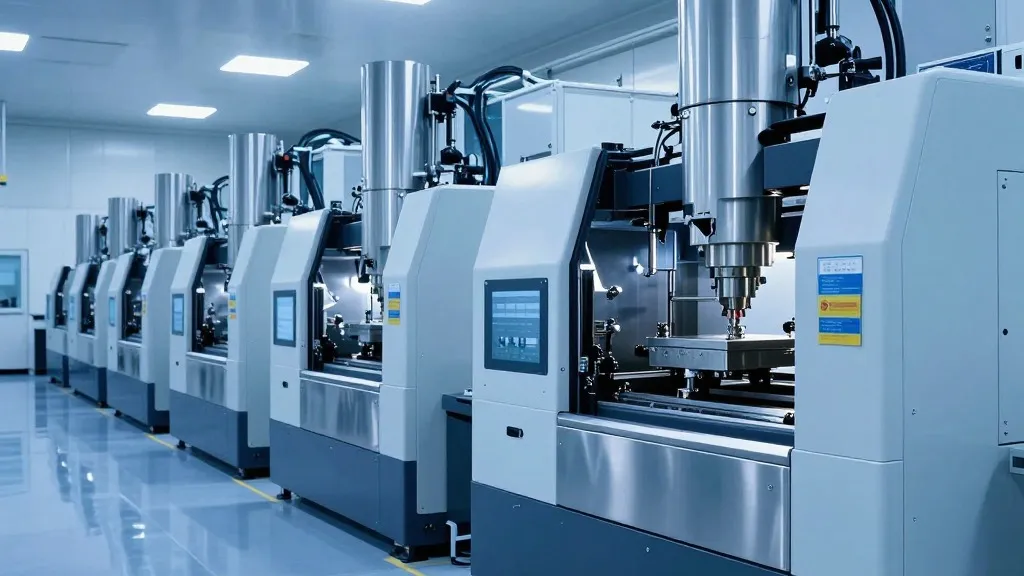
The missing machine is reshaping the global semiconductor landscape.
Export controls have prevented ASML's extreme ultraviolet lithography systems from entering China, forcing domestic firms to rely on older deep ultraviolet equipment. Experts note that while this approach allows for the production of capable silicon, it carries higher costs, longer production times, and a greater risk of defects. The efficiency gap is stark. In a June report, Morgan Stanley estimated that CXMT, a major Chinese DRAM maker, produces only about one-third as many bits per wafer as its Western rivals. The bank described access to advanced lithography as a hard ceiling for the sector.
The primary figure in this debate is Chris Mack, co-founder and CTO of Fractilia. He argues that the industry standard suggests three exposures on a 193 immersion tool cost about the same as a single EUV exposure. However, at four masks, EUV becomes the more economical choice. Mack emphasizes that each new pattern must align precisely with previous layers. More exposures lead to accumulated errors and process variation. Designers often add space around features to compensate, which enlarges the chip and reduces the number of dies per wafer. He notes that wafers cost tens of thousands of dollars, and the goal is to sell die, not wafers.
China has nonetheless made significant strides. A 2023 teardown of the Huawei Mate 60 Pro revealed that its Kirin 9000S processor was made by SMIC using a second-generation 7nm-class process without EUV. Recent analysis suggests SMIC has moved its DUV-based process closer to 5nm density, though it still trails TSMC and Samsung. Morgan Stanley expects China's AI chip self-sufficiency to rise from 42 percent in 2025 to 70 percent by 2030. This growth will come despite persistent gaps in EUV, high-bandwidth memory, and advanced software.
The path forward involves trade-offs. Chinese chipmakers can continue pushing DUV technology while accepting larger dies, poorer yields, or longer manufacturing times. They can also add new capacity. Morgan Stanley assumes CXMT will stay on 1-alpha DRAM without EUV, yet still increase its share of global supply from 14 percent in 2026 to 16 percent in 2028. The bank anticipates that new greenfield capacity will drive this growth. Meanwhile, EUV remains the preferred path for the most advanced nodes. Micron developed its 1-alpha DRAM without EUV, but eventually turned to the technology for its 1-gamma generation to achieve more than 30 percent greater bit density. Mack says he would be hard pressed to believe a 3nm or 2nm node could be economically viable without EUV.
The stakes are high for global supply chains. As China works around the ban, the cost of every extra exposure climbs. The industry is watching to see if multiple patterning and advanced packaging can bridge the remaining gap by the end of the decade.
Source: Tom's Hardware