Tesla's profit dips as AI spending outpaces revenue gains
Automaker’s quarterly results show a recovery in vehicle margins, yet heavy investments in artificial intelligence and new hardware drive a significant drop in operating income.
By Andre Williams ·
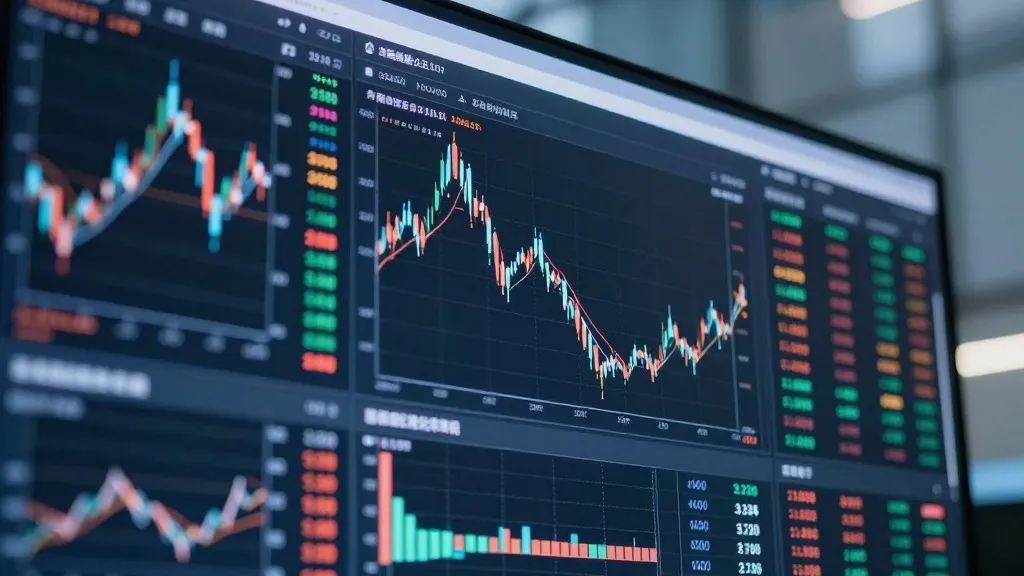
Tesla reported its third-quarter 2026 financial results after the market closed on Tuesday, revealing a complex picture of stabilizing revenue against a backdrop of shrinking profits. The electric vehicle manufacturer generated $28.05 billion in sales, a figure that remained flat compared to the same period last year and aligned closely with Wall Street expectations. While the company managed to beat analyst estimates for non-GAAP earnings per share at $0.48, the bottom line still reflects a downward trend, with GAAP net income falling 43% to $787 million.
The core narrative of the quarter centers on a rebound in automotive profitability that is being overshadowed by aggressive capital allocation. Automotive gross margin, excluding regulatory credits, recovered to 18.1%, up from 16.3% in the previous quarter and 15.4% a year earlier. However, this improvement in unit economics did not translate to higher operating income, which plummeted 56% year-over-year to $718 million. This decline is largely attributed to a 39% surge in operating expenses, driven by Tesla’s expanding focus on artificial intelligence, the Optimus robot, and the Cybercab.
Specifically, research and development spending jumped 69% to $2.76 billion as the company invests in what it now terms 'Super Intelligence.' Stock-based compensation also saw a sharp increase, reaching $1.17 billion due to the inclusion of the 2025 CEO pay package. On the balance sheet, capital spending more than doubled to $4.73 billion, significantly exceeding the $2.25 billion reported in the same quarter last year. Consequently, free cash flow dropped to $1.53 billion, a stark contrast to the $3.99 billion generated a year prior, though it marked a recovery from the negative $1.09 billion recorded in the second quarter.
A key area of scrutiny for investors is the pace of capital expenditure relative to management’s annual guidance. Through the first nine months of 2026, Tesla has spent $13.01 billion on capital projects, falling short of the 'more than $25 billion' target set for the full year. To meet this guidance, the company would need to deploy approximately $12 billion in the final quarter alone, a figure that would more than double its largest spending quarter to date. Since the shareholder letter did not revise the outlook, the discrepancy suggests either an imminent surge in spending or a potential delay of certain projects into 2027.
Volume metrics presented a mixed signal. Tesla delivered 486,532 vehicles, a 2.1% decline year-over-year, while producing only 464,391 units. The company attributes the flat sales volume to battery availability constraints rather than a lack of consumer demand, noting that it ended the quarter with the largest backlog for passenger vehicles in four years. Despite this supply-side explanation, average selling prices continued to fall, a trend that typically contradicts the behavior of a supply-constrained manufacturer.
Segment performance varied significantly, with the energy division acting as a drag on revenue. Energy generation and storage sales dropped 16% to $2.88 billion, partly due to tariff-related customer refunds, even as deployments increased to 13.7 GWh. Conversely, the services and other segment emerged as a standout, with revenue growing 33% to $4.61 billion and gross profit hitting a record $734 million. Management indicated that the full shareholder deck is available on the investor relations site, with further details to be discussed on the earnings call.
The financial results underscore a transition period for Tesla, where traditional automotive metrics are improving but are being weighed down by the heavy costs of its future-oriented technology roadmap. As the company navigates these competing priorities, the market will likely focus on whether the current spending levels can be justified by upcoming product launches and autonomous driving milestones.
Source: Electrek