FCC Bans Two Devices Over Huawei-Linked Chip
The agency invoked a new chip-level rule to block a dashcam and video transmitter from US sale, citing national security risks tied to their AI processing units.
By Jason Fischer ·
The Federal Communications Commission has exercised a new regulatory power for the first time, banning two specific consumer products from the US market based on the silicon inside them rather than their brand names.
The targeted items are a dashboard camera and a wireless video transmitter. The agency blocked these devices because they contain a HiSilicon Smart Vision system on a chip, or SoC. HiSilicon is a subsidiary of Huawei, a company whose entities appear on the FCC's Covered List of organizations considered a risk to US national security.
This action closes a gap in previous enforcement where rebranded products with Chinese components could remain on shelves. Under the new framework, the ban applies to the component itself. This means regulators no longer need to track every individual product label or model revision that uses the same underlying technology.
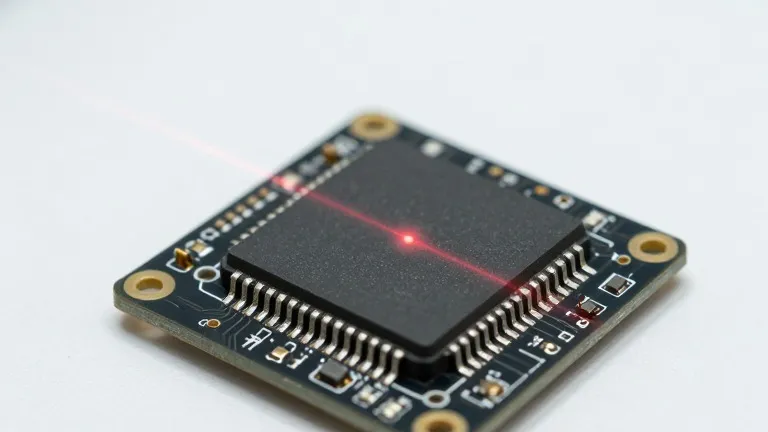
The specific chip in question is the Hi3516CV610 UHD Smart Vision. It is designed for surveillance applications, including vehicle dashcams and wireless CCTV systems. The processor integrates WiFi, Ethernet, video encoding hardware, an Arm Cortex-A7 processor, and a neural processing unit, or NPU, for artificial intelligence tasks.
The NPU is the primary focus of the FCC's concern. The agency classifies it as a device containing logic-bearing smart components made by entities on the Covered List. According to the chip's data sheet, its Intelligent Video Engine runs on this NPU. It utilizes a built-in dedicated multimodal large model and transformer feature acceleration to analyze video frames.
This architecture allows the AI to maintain attention on related subjects across multiple frames. The data sheet lists pets, faces, human figures, and parcels as objects the system can track. For consumers, this functionality could allow a camera to distinguish between a pet escaping and an unknown person taking a courier parcel.
The FCC argues that this same logic-bearing AI could serve less benign purposes. The agency believes the technology could be used to survey US citizens and log their faces for foreign surveillance. This concern aligns with previous controversies involving Huawei, which used shell companies to deceive TSMC into manufacturing AI chips despite US requests to halt supply to certain Chinese customers.
Reactions to the decision have been mixed. Some observers criticized the move as protectionism, questioning whether American surveillance practices differ meaningfully from those in other nations. Others debated the scope of the FCC's authority, with one commenter noting that the Communications Act of 1934 directs the agency to protect both wired and wireless communications.
A separate argument suggested that silicon-based bans should have been the standard from the start. Proponents of this view pointed to the large number of revisions and regional variants a single product can undergo, making chip-level regulation a more efficient method. The new rule shifts the burden of compliance from product branding to component sourcing.
Source: Tom's Hardware