Gaza families split children among aunts after losing homes
A ministry count shows 54,468 children lost parents since 2023, forcing aunts and widows to share caregiving duties without stable income.
By Eric Laurent ·
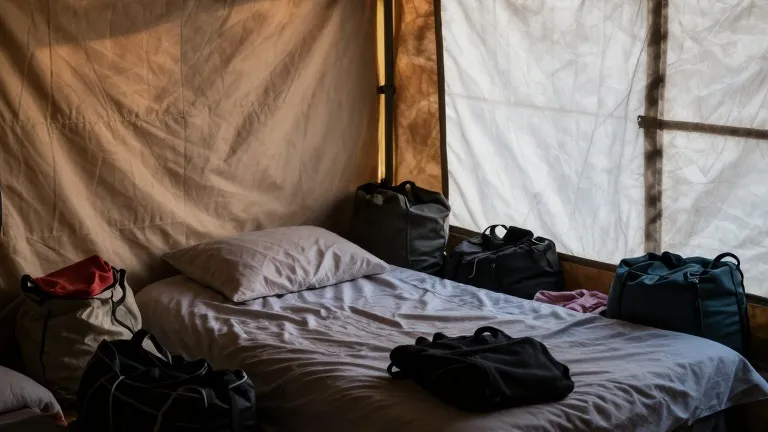
Three children in Gaza pack their bags every two days to move between the tents of their maternal aunts. Mariam, 16, Aya, 14, and Jebril, 12, have maintained this rotation since an Israeli airstrike killed their mother in central Gaza. The siblings lost their father during the 2014 offensive and their home during the war that began in 2023.
The children took shelter with their mother, Islam, in a makeshift tent in Deir al-Balah. On the nineteenth day after the ceasefire took effect on 10 October 2025, a bomb struck the tent. Their aunt, Warda al-Muzeini, said the children had no stable home before or after the attack. They now rotate between their maternal aunts, spending two nights with each woman.
The Palestinian Ministry of Social Development in Gaza reported that 54,468 children have lost one or both parents since October 2023. The ministry counts at least 64,000 widows and 71,000 orphaned children across the territory. These figures include people bereaved in earlier Israeli military attacks. The ministry's registration system also lists around 3,000 children with no registered guardian or caregiver.
Muzeini lost her husband in an Israeli air strike and now raises four children alone. She has no job or reliable income and said she struggles to provide one meal a day. Another of the aunts caring for the Abu Asser children is also a widow. The sisters split the cost of basic necessities. One aunt buys pyjamas, another provides slippers, and a third gives the children pocket money for a few days.
Ministry spokesperson Aziza al-Kahlout said the official numbers do not capture the daily suffering involved. She stated that a child who loses both parents loses care, safety, education, and childhood. Such children are forced to carry responsibilities beyond their years. Women who become the only breadwinners for their families face the burden of providing for and raising children amid devastation.
Kahlout warned of growing risks of child labour, school dropout, and early marriage in Gaza. She attributed these trends to poverty, displacement, and the loss of family breadwinners. She said orphaned children are especially exposed as economic and humanitarian conditions worsen and adequate shelter remains scarce.
Wafaa al-Attar was 10 years old when she lost her entire family in a single blast on 22 February 2024. She left her home in Deir al-Balah to charge her father's phone at her uncle's house. A massive air strike hit the multi-storey building where her family was living. The blast killed her father, Ahmed, her mother, Khouloud, and her four siblings: Rital, eight; Muhammed, five; Obada, three; and Yazan, who was nine months old.
Attar suffered minor shrapnel injuries and was taken to hospital. She kept asking about her family until her uncle arrived to tell her they had died. She stayed silent for two or three hours before asking why all of them were killed at once. She first stayed with her grandparents and later moved in with her uncle, his wife, and their newborn child.
Attar said she wished for months that she had been in the house when it was bombed. Her uncle's wife told her that her father would want her to stay strong. Attar, now 13, said she knows no one can replace her own family.
Source: Middle East Eye