UK Faces Pressure to Close a €70 Billion Funding Gap for Ukraine
European leaders are set to press the UK to contribute more to Ukraine's defense as financial shortfalls for 2027 come into focus.
By Eric Laurent ·
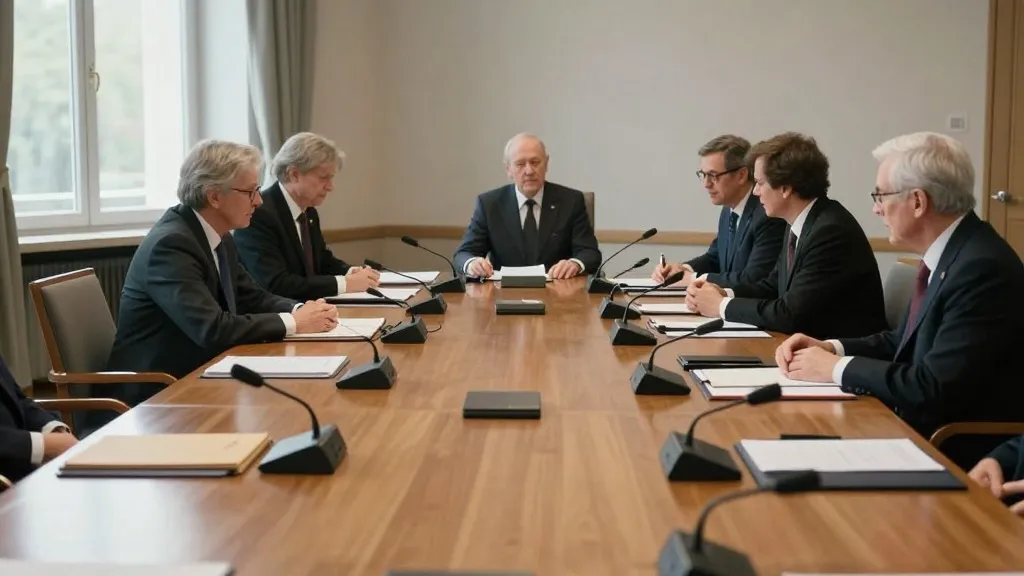
European Union officials plan to ask British leadership to increase financial commitments toward Ukraine's defense when leaders meet in Brussels on November 20. The request follows a pattern in which appeals for additional aid from Canada, Japan, and the United Kingdom regarding future funding have not yet been answered. Brussels intends to raise the matter with Canadian Prime Minister Mark Carney during an upcoming summit in Montreal, while a similar request will be directed at Andy Burnham during his meeting with European Commission President Ursula von der Leyen and European Council President António Costa.
Ukraine has identified a €70 billion funding gap for 2027 to cover both military and civilian requirements. Currently, the European Union and its member states account for 80 percent of Ukraine's financing. European Commission officials maintain that a fair contribution share from the EU is two-thirds, leaving allies to cover the remainder. Von der Leyen stated last week, 'We will continue to lead, but we urgently need other partners to step up.' The European Union previously approved a €90 billion loan designed to cover two-thirds of Ukraine's funding needs for 2026 and 2027.
The timing of these discussions coincides with the preparation of a UK budget scheduled for next week. Chancellor John Healey is balancing requests for increased spending against rising borrowing costs and a weakening economic outlook. Healey remarked earlier this month that he is 'working on different ways we can step up support for Ukraine: military, diplomatic and economic.' The UK government reports total commitments of £25 billion to Ukraine, with £16 billion designated for military aid. According to the Kiel Institute's Ukraine Support Tracker, the UK ranks as the fourth largest donor, following the United States, Germany, and France. When adjusted for the size of national income, UK support stands at 0.86 percent, compared to 1.1 percent for France and 1.5 percent for Germany.
Alongside discussions regarding Ukraine, the November 20 summit is expected to conclude three specific agreements. These include a food and animal health arrangement to reduce administrative burdens, a link between the EU and UK emissions trading systems to shield British industry from European carbon taxes, and a youth mobility program for individuals aged 18 to 30 to live and work across borders. The Commission has proposed delaying the resolution of university tuition fee disputes to technical talks occurring within six months of the summit. The UK seeks to charge EU students international rates, while the EU requests a return to pre-Brexit policies where EU students paid domestic rates.
European diplomats express confidence regarding the leverage held during negotiations, noting that the food safety and emissions trading deals cannot take effect unless a youth mobility agreement is finalized to the satisfaction of the European side. One diplomat commented, 'The three elements are a sort of gift to the UK, but not a massive gift,' adding, 'The leverage is that the UK needs this.' Another diplomat stated that postponing the tuition fee dispute would require consensus among the EU's 27 member states, noting, 'There is no clear majority saying let's drop it now for six months.'
Source: The Guardian