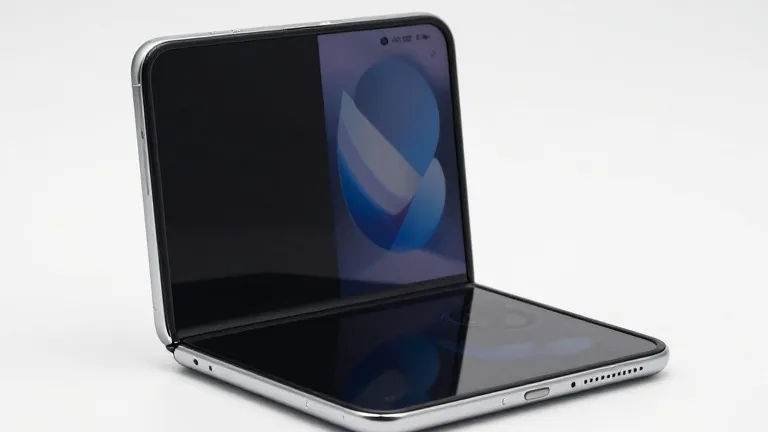
iPhone Duo Design: Apple's Mandatory Sidebar Shrinks Usable Display
A fixed navigation dock occupies a large portion of the 5.4-inch cover screen, limiting real estate compared to the Galaxy Z Fold 8.
By Eric Laurent ·

Apple’s mandatory sidebar consumes a substantial portion of the iPhone Duo’s 5.4-inch cover display, leaving users with less usable space than competitors. The device is currently available in limited markets, and early feedback suggests the software layout creates friction on the smaller outer screen. This stands in contrast to Samsung’s Galaxy Z Fold 8, which utilizes its cover display with minimal wasted area.
The iPhone Duo features a physical form that is taller and narrower than the Galaxy Z Fold 8. This design choice makes one-handed operation more difficult for some users. The Verge’s Allison Johnson noted that the Galaxy Z Fold 8 is easier to navigate due to its proportions. For consumers who prefer the unique outer screen of foldable devices, this difference in physical handling is a primary consideration.
The core issue lies in the software interface. Apple implemented a sidebar on the right side of the screen to streamline navigation. The dock occupies a fixed vertical strip, effectively reducing the width available for apps. A post on Twitter/X illustrated the gap between the two devices. When the Galaxy Z Fold 8 uses gesture navigation, the bottom of the screen remains clear for content. The iPhone Duo’s layout does not offer this flexibility, resulting in a persistent block of unused pixels.
Apple’s approach aims to simulate the experience of a standard smartphone. By constraining the display area, the system stretches media and apps to appear taller. This method mirrors the aspect ratio of non-folding slab devices. However, the Galaxy Z Fold 8 demonstrates an alternative strategy. It allows the cover screen to function as a wider canvas, giving apps more horizontal room to display information without forced scaling.
The Galaxy Z Fold 8 continues to perform well in the market. Its software has been refined over several generations to handle large screens efficiently. Apple is making its first attempt at a wide foldable device. Early reviews indicate that the hardware is promising, but the software implementation leaves room for improvement. The iPhone Duo’s current interface prioritizes consistency with existing iOS standards over maximizing the unique real estate of the cover display.
Users who prioritize screen real estate on their secondary displays may find the iPhone Duo’s layout restrictive. The fixed sidebar prevents the full width of the 5.4-inch panel from being utilized for active content. This design choice reflects Apple’s strategy of adapting its established interface to a new form factor. Meanwhile, Samsung’s device offers a more open layout that accommodates various navigation styles without permanently dedicating screen space to a dock.
Source: 9to5Google