Ukraine's Satellite Disruption Exposes Concentration Risks in Global Space Access
A recent disruption to Ukraine's satellite communications has exposed the significant geopolitical risks inherent in the current concentration of launch capabilities.
By Sofia Molina ·
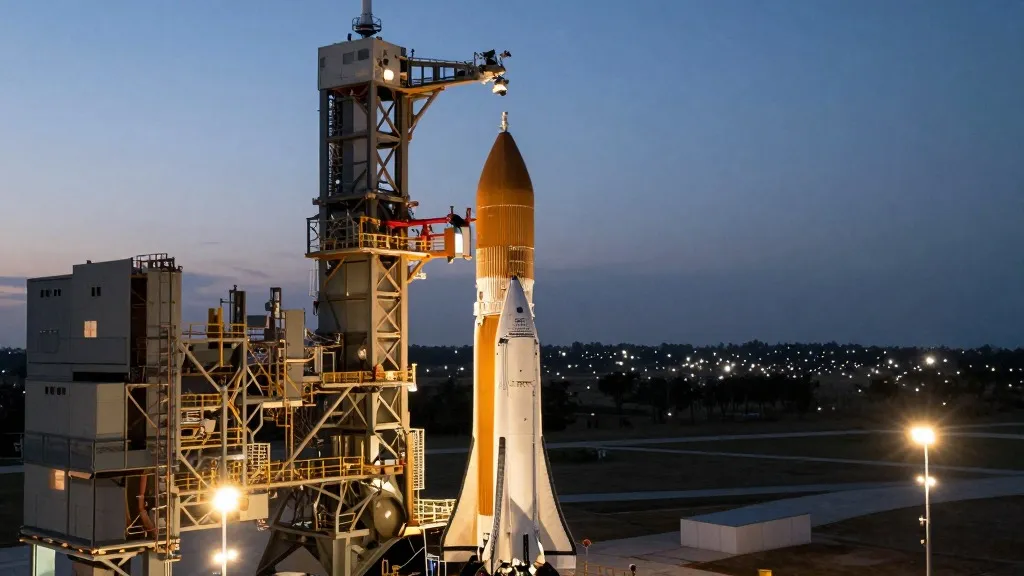
Space access has long been viewed as a critical component of national security and global commerce, yet the infrastructure supporting it remains heavily concentrated. This reality came into sharp focus last week when a temporary reduction in service capacity affected military operations in Ukraine, highlighting the dependencies that modern defense strategies share with private commercial entities.
Starshield, the specialized military variant of SpaceX's broadband constellation, experienced a slowdown that restricted terminal connectivity for assets moving at higher velocities. Ukrainian forces reported that their interceptors, designed to neutralize bomb-carrying drones, failed to maintain communication at speed. This technical limitation reportedly allowed Russian forces to strike energy infrastructure more effectively, resulting in two deaths and at least 17 injuries. The Ukrainian military stated that it received no prior warning of the change in service parameters.
President Volodymyr Zelenskyy characterized the incident as a direct signal from the United States. This interpretation emerged as diplomatic tensions escalated between Kyiv and the White House. Public reaction was swift and critical, with observers directing frustration toward both the American administration for its perceived shift in support and SpaceX Chief Executive Officer Elon Musk for enabling the leverage. Initial explanations for the event varied significantly. Musk first asserted that the company lacked control over Starshield, placing the decision with the U.S. military, while the White House denied involvement. Subsequent reports suggested that Musk proposed the restriction to President Donald Trump, who accepted it, before final accounts indicated that Musk ordered the measure directly. Connectivity for Ukraine has since been restored.
Ukraine's defense strategy relies heavily on American technology, including Starlink and Starshield. Access to these systems has faced limitations in the past, such as in 2022, when coverage was not extended to support a counteroffensive in Crimea. Analysts argue that this latest episode demonstrates how much geopolitical influence has accrued to a single unelected executive. This outcome stems from the high degree of consolidation within the space industry, where one corporation holds a dominant position in the launch sector.
Dr. Wendy Whitman Cobb of the School of Advanced Air and Space Studies at Maxwell Air Force Base noted that SpaceX holds a de facto monopoly on launch operations. While competitors such as United Launch Alliance, Blue Origin, and Rocket Lab exist, she observed that none currently matches SpaceX in terms of frequency, payload mass, scale, or cost efficiency. Space economist Oğuz Karasu of the Oxford Space Initiative added that this dominance is practical rather than legal. He explained that launch operations account for approximately eight percent of the broader space industry, yet the remaining sectors are inoperable without this foundational capability.
The company has deployed a network of more than 10,000 Starlink satellites in low Earth orbit, utilizing its Falcon 9 rockets to keep costs low. Andrew Reddie of the University of California, Berkeley, described the situation as approaching an antitrust concern. Because SpaceX launches support constellations that it owns, the incentive to launch competing networks is diminished. Although SpaceX has launched some Amazon Kuiper, now known as Leo, satellites, experts have noted rising prices for Falcon 9 services, particularly for low Earth orbit missions. Starlink subscription costs have also increased since the service began its beta phase in 2020.
Experts emphasized that the stakes of this concentration extend into daily life through systems like GPS and satellite communications. Whitman Cobb pointed out that a GPS outage could disrupt fuel pumps, ATMs, financial transactions, and ambulance dispatch systems. Karasu argued that granting a single individual such extensive control poses a risk to the long-term future of society. The implications are not limited to commercial users. NASA and the Space Force also face exposure, as SpaceX is reportedly planning to retire the Falcon 9 rocket and cease accepting new missions starting in 2028. This move leaves the Space Force searching for alternative launch options for military satellites and raises questions about NASA's future access to the Crew Dragon capsule.
A technical issue with Falcon 9 in February briefly grounded the rocket and sparked concerns about the Crew-12 launch. While NASA continues to support Boeing's struggling Starliner program and contract with firms like Rocket Lab and Blue Origin, the market remains unbalanced. Michele Scataglini of the Oxford Space Initiative stated that the sector requires more competition to function as a true market. Reddie identified the core security problem as a non-state actor making decisions with the authority of a government. He noted that this episode directly impacted Ukraine's defensive capability. Scataglini called the event a global wake-up call, warning that a single firm could determine which nations gain access to space, particularly in the Global South. Whitman Cobb expressed cautious optimism that the incident would raise awareness of the risks associated with relying on a single company, though she acknowledged that it took casualties for the issue to gain recognition.
Source: The Verge