Ottawa Disputes U.S. Meddling Claims as Trump Backs Half-Dozen Foreign Leaders
The U.S. Embassy detailed Canadian actions ahead of the November 3 vote, a move critics say follows a pattern of American intervention in global elections.
By Eric Laurent ·
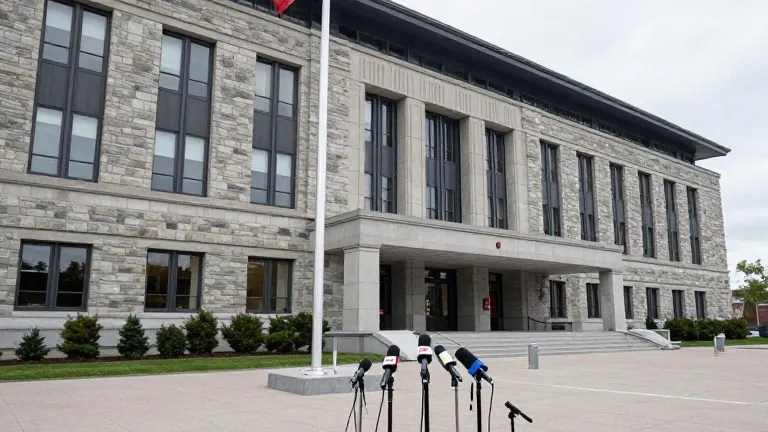
Prime Minister Mark Carney dismissed U.S. accusations of election interference on Friday, arguing that the claims lack merit. He made the comments during a news conference in Istanbul, where he expressed disappointment that Ambassador Pete Hoekstra sees making such suggestions as part of his role. The U.S. Embassy in Ottawa released a fact sheet on Wednesday listing specific instances of potential interference in the upcoming U.S. midterms.
The embassy’s document cited several actions by Canadian officials. It pointed to Liberal MP Anthony Housefather canvassing for a Florida Democrat during a primary vote earlier this year. The list also included comments made by Industry Minister Mélanie Joly regarding Canada’s counter-tariff strategy, some dating back to March 2025. Additionally, the release referenced the Ontario government’s Ronald Reagan advertisement and a federal billboard campaign from early 2025.
Carney and other Canadian politicians have pushed back against the notion that their government is trying to influence the November 3 vote. Joly stated that she has met with both Republicans and Democrats in recent months. Daniel Drezner, a professor of international politics at Tufts University, described those meetings as garden variety diplomacy. He suggested that Housefather’s canvassing might be slightly unusual, but he did not view the other listed instances as overt interference.
The U.S. warnings come amid a trade dispute that has become a pressure point for Republican candidates in border states. The conflict has impacted elections in Michigan and Maine. Republican Sen. Susan Collins, who has represented Maine since 1997, said she secured exemptions to recent tariffs. She posted on social media that she will continue working with administration officials to seek additional relief and encourage a broader trade agreement with Canada.
Mike Rogers, the Republican candidate for Michigan’s open Senate seat, released a 30-second advertisement earlier this month. In the spot, Rogers stated that Canada is not an enemy and called for an end to the tariff war. The trade friction has complicated the political landscape for midterms, with candidates trying to balance party loyalty with economic realities in their districts.
President Donald Trump has a history of endorsing foreign candidates while serving as the sitting U.S. president. Since returning to the White House in early 2025, he has backed candidates in Poland, Honduras, Colombia, and Japan. Most recently, he voiced support for Israeli Prime Minister Benjamin Netanyahu ahead of an election. He also supported Viktor Orbán’s re-election bid in Hungary, a campaign that included Vice-President JD Vance at a rally in Budapest.
Former U.S. ambassador to Canada James Blanchard told Rosemary Barton Live on Sunday that the administration has no credibility given this track record. He noted that he would take the accusations seriously if they came from the Reagan, Bush, Obama, or Clinton administrations, but not from the current one. The U.S. Embassy declined to comment when asked if a similar Canadian endorsement would constitute interference. Trump previously wrote on social media that he would rather deal with a liberal than a conservative during the 2025 Canadian campaign.
Drezner said the situation resembles a pot calling the kettle black. He argued that heads of state typically do not weigh in on foreign elections to maintain neutrality. He suggested the administration might blame Canada for poor midterm results, a strategy consistent with the White House’s approach. Carney said he does not see the administration blaming Canada for a poor result and imposing more tariffs.
Source: CBC News