SpaceX launch count: 116 Falcon 9 flights in 2026 as Starship development accelerates
A 27-satellite Starlink deployment from Vandenberg Space Force Base marks the 116th mission of the year, a sharp decline from the 165 flights completed in 2025.
By Sofia Molina ·
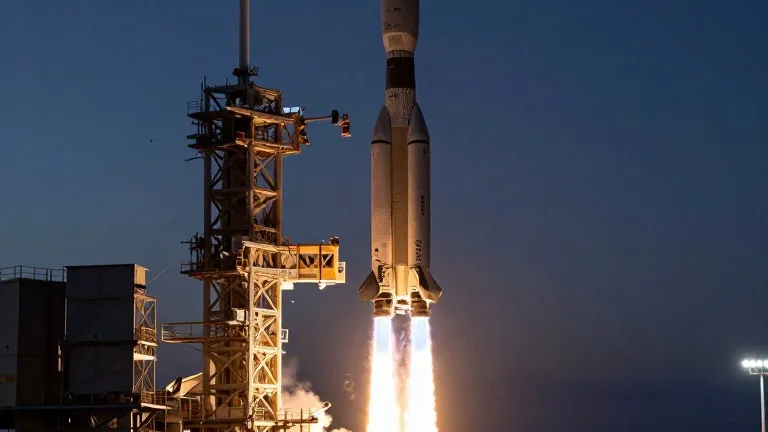
SpaceX launched its 116th Falcon 9 rocket of 2026 on Oct. 23, deploying 27 Starlink satellites into low Earth orbit. The mission, designated Starlink Group 15-15, lifted off from Pad 4E at Vandenberg Space Force Base in California at 3:48 p.m. local time. This flight continues a trend of reduced launch frequency for the company’s workhorse rocket as it shifts focus to its next-generation Starship vehicle.
The Falcon 9 first stage, booster B1063, separated from the upper stage 2.5 minutes into the flight. It later landed on the droneship "Of Course I Still Love You" after an eight-minute mission. This was the 36th time B1063 flew and landed, a booster that previously supported NASA’s DART asteroid mission in November 2021. The upper stage coasted for approximately 45 minutes before performing a second burn to insert the satellites into orbit, a process scheduled to conclude 62 minutes after liftoff.
The Starlink constellation now comprises more than 11,000 active spacecraft. However, the pace of adding new satellites has slowed dramatically. In 2025, the Falcon 9 completed 165 launches, setting a record. In 2026, the rocket has flown 116 times with the year still ongoing. At the current rate, SpaceX is expected to complete just under 150 missions by Dec. 31, ensuring 2025 remains the busiest year in the rocket’s history.
The shift in cadence reflects a strategic pivot toward Starship. This larger rocket is designed for full reusability and will carry the upgraded Version 3 Starlink satellites, which are too large for the Falcon 9 payload fairing. SpaceX plans to phase out both the Falcon 9 and Falcon Heavy variants almost entirely once Starship begins operational flights. The 100th Falcon 9 launch of 2026, which deployed Starlink 10-49 from Cape Canaveral, was recently identified as the final Starlink mission from Florida’s Space Coast.
Launch intervals on the West Coast are also lengthening. At peak performance, Falcon 9 Starlink missions flew every two to three days. The Oct. 23 flight came 11 days after the previous Starlink launch, which itself was the first in more than three weeks. This gap in activity highlights the transition period as the company reallocates resources and attention to the development and testing of Starship.
The 116 missions flown in 2026 included approximately 75% of flights dedicated to Starlink deployments. The remainder supported other commercial and government customers. As the year closes, the data suggests the Falcon 9 will finish with a launch count well below its previous record, a direct result of the company’s long-term infrastructure goals.
The deployment of the 27 satellites from the California coast adds to the global network of broadband internet terminals. These spacecraft operate in low Earth orbit to provide coverage in underserved regions. The successful landing of booster B1063 demonstrates the continued reliability of the Falcon 9 system even as its role in the launch fleet begins to narrow.
Source: Space.com