Israeli Opposition Weighs Minority Cabinet
Gadi Eisenkot proposes a 58-seat floor for governance, a strategy rejected by rivals Naftali Bennett and Avigdor Liberman.
By Sofia Molina ·
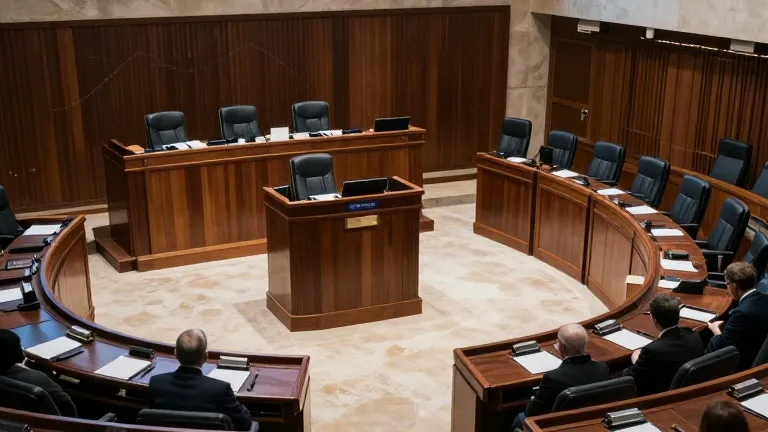
The anti-Netanyahu bloc is evaluating a minority government structure for the next term, a move opposed by two major coalition partners.
Gadi Eisenkot, who seeks to lead the opposition, has outlined a plan requiring 58 or 59 Knesset seats to form a cabinet. Under this approach, the new government would win a confidence vote without securing the 61 seats traditionally viewed as necessary for stable governance. The administration would then work to expand its parliamentary support after taking office.
Current polls indicate the opposition camp holds an advantage over the outgoing coalition, though most Zionist parties remain short of the 61-seat threshold. Eisenkot argues that legal rules allow for a government to be sworn in with a majority of present votes, meaning abstentions could facilitate the process. This method applies to forming a new cabinet but does not permit the removal of a sitting government via a constructive vote of no confidence without 61 affirmative votes.
Naftali Bennett and Avigdor Liberman have voiced strong objections to this strategy. Liberman categorically rejects a minority administration, even a transitional one, and demands a Zionist majority from the outset. He stated that another election would be preferable to a government that fails to meet his conditions. Bennett, along with Yair Lapid, also insists on a Zionist-led government and opposes reliance on votes or abstentions from Arab parties.
While Eisenkot has not excluded support from the Ra'am party, no specific agreement exists yet. Liberman has suggested recruiting Likud MKs for a government without Netanyahu, though he has not named any willing candidates. A recent meeting between Eisenkot and Liberman concluded with a shared goal of increasing voter turnout, but the leaders did not resolve their strategic differences.
The opposition is also focused on replacing Knesset Speaker Amir Ohana before a coalition is formed. Controlling the speaker’s office would allow the bloc to manage the parliamentary agenda even if Netanyahu remains head of a caretaker government. Candidates for the speaker role include Chili Tropper, Matan Kahana, Elazar Stern, Meirav Ben-Ari, Eitan Ginzburg, Efrat Rayten, and Oded Forer. Liberman estimated that one-third of outgoing coalition MKs might vote against Ohana, though no consensus candidate has been selected.
The bloc intends to advance a state commission of inquiry into October 7, revise conscription laws, and limit prime ministerial tenure. Liberman also seeks to bar individuals facing criminal charges from serving as prime minister. Party teams have begun coordinating on these issues, but no binding agreement exists on the details or the legislative order.
The next steps involve finalizing the speaker candidate and continuing internal negotiations. The opposition aims to secure a majority for the speaker election in the new Knesset, potentially with the help of MKs from Arab parties. This process will occur in the early days of the new term, setting the stage for coalition talks.
Source: The Jerusalem Post
More Politics · World news · Report a business · Got a Story?